
Reusing Pallets, Boxes and Packing Materials: A Practical Guide for Warehouses
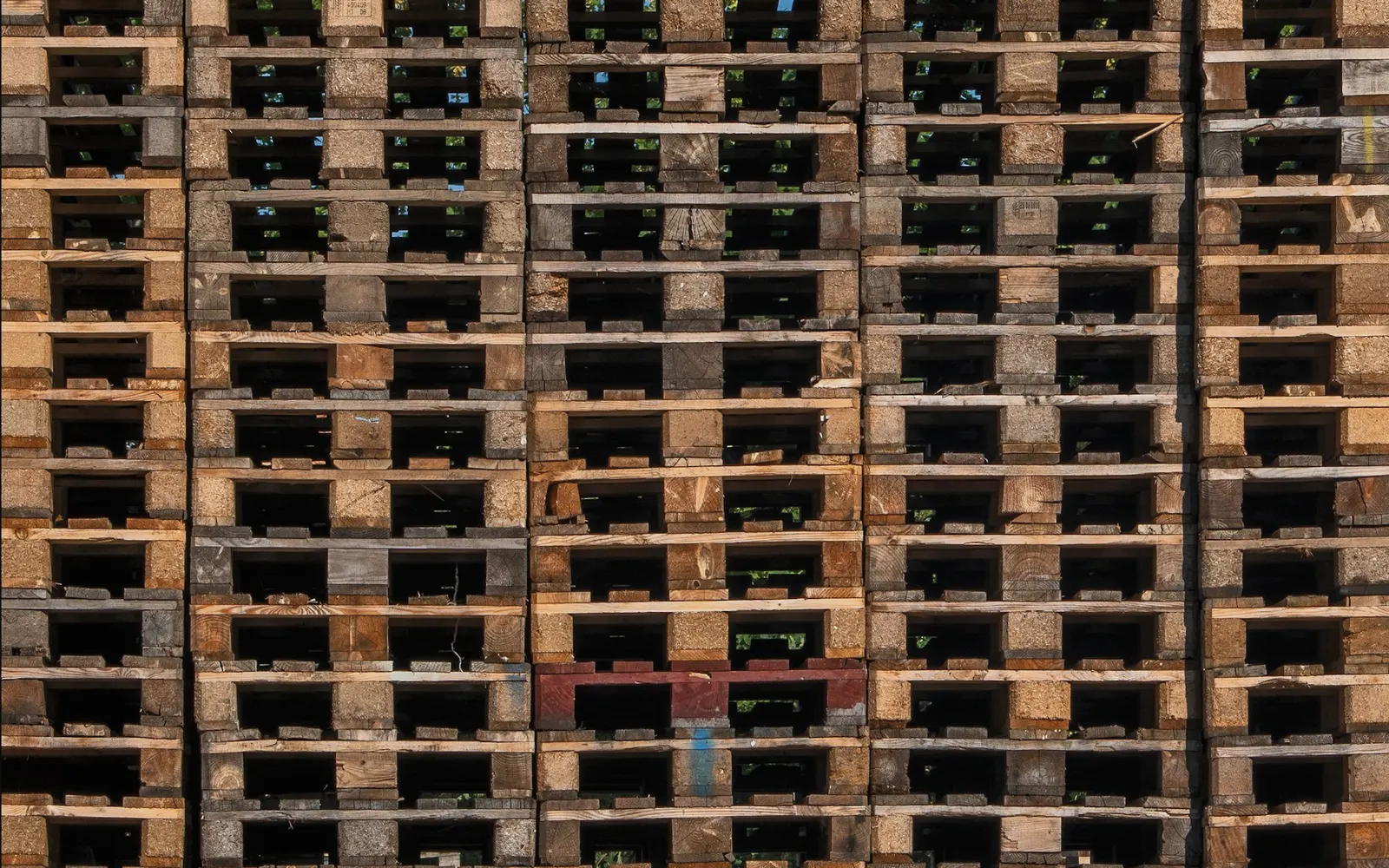
Warehouses can reuse shipping supplies, including pallets, corrugated boxes, void fill and stretch-wrapped dunnage, as long as each item passes a basic inspection and is matched to a load it can safely carry. A simple reuse program cuts packaging spend and waste without slowing down shipping. This guide covers what to check, what not to reuse, and how to set up storage and labeling so reused materials stay organized.
Key takeaways
- Reuse only what passes inspection: structural damage, contamination and moisture are automatic rejects.
- Pallets and heavy-duty boxes offer the biggest savings per item.
- Remove or fully cover old labels and barcodes before a box ships again.
- A dedicated, dry, sorted storage area is what makes reuse practical at scale.
Which shipping supplies can a warehouse reuse?
Most inbound packaging can be reused at least once if it arrives in good shape.
| Material | Reusable? | Notes |
|---|---|---|
| Wood pallets | Often | Inspect boards, stringers and nails |
| Plastic pallets | Usually | Check for cracks and warping |
| Corrugated boxes | Often | Best for light to medium loads on reuse |
| Gaylord boxes | Sometimes | Only if walls and base are intact |
| Bubble wrap, air pillows | Often | Discard if deflated or torn |
| Kraft paper, packing paper | Often | Keep dry and clean |
| Foam inserts | Sometimes | Only if they fit the next product |
| Stretch wrap, tape | No | Single use; recycle where possible |
How do you inspect pallets for reuse?
Pallets carry the most weight, so they need the strictest check.
Pallet inspection checklist
- Boards: no cracked, split or missing deck boards.
- Stringers or blocks: no breaks or large splits.
- Fasteners: no protruding nails or loose staples.
- Contamination: no spills, chemical residue, mold or strong odors.
- Moisture: dry to the touch; wet pallets lose strength.
- Markings: check for heat treatment stamps if the pallet may be used for export.
Pallets that fail can often be repaired by a pallet recycler or sold back to one. Do not use a doubtful pallet for heavy or tall loads.
How do you know if a box is still strong enough?
Corrugated loses strength every time it is shipped, stacked or exposed to humidity. Check each box before putting it into your reuse stock.
- Corners and edges are square and not crushed.
- Walls are not bowed, soft or punctured.
- Flaps still fold and seal cleanly.
- No water damage, staining or mold.
- Print and labels can be fully removed or covered.
As a rule of thumb, downgrade reused boxes: a box that originally carried a heavy load should carry a lighter one the second time.
When should you not reuse shipping materials?
Reuse is not always the right call. Skip it when:
- The box or pallet shows any structural damage.
- It previously held food, chemicals, hazardous materials or anything that leaked.
- The customer or marketplace requires new or branded packaging.
- You are shipping high-value, fragile or regulated items where packaging failure is costly.
- Old hazmat markings cannot be fully removed.
- The material has been stored somewhere damp or dirty.
When in doubt, recycle the material and use new packaging for that shipment.
How should a warehouse store reused packaging?
Storage is where reuse programs usually succeed or fail. Loose piles of mixed boxes get ignored.
Set up a dedicated area
Choose a dry, covered spot close to packing stations. Keep materials off the floor, especially cardboard, which absorbs moisture.
Sort by size and strength
Group boxes by dimensions and wall strength. Flatten them and stack them in labeled bins or shelves. Keep pallets in a separate stack by type and condition grade.
Set a limit
Decide how much reuse stock you will hold. Without a cap, the area fills up with boxes that never get used.
How should reused boxes be labeled?
Mislabeled packages are the main operational risk of reuse.
- Remove old shipping labels completely, or cover them with a solid blank label.
- Black out or cover old barcodes, so scanners do not pick them up.
- Remove or cover hazmat and handling marks that no longer apply.
- Mark internal size codes on the flattened box so packers can find the right one fast.
- Apply the new label on a flat, clean surface.
How much can reusing shipping supplies save?
It depends on your volume and the price you pay for new materials. Here is an illustrative example only, with made-up numbers:
A warehouse ships 400 packages a week. If 25% of outbound shipments could use a reused box instead of a new one costing $1.50, that is 100 boxes a week, or about $150 a week in avoided box purchases. Over a year that is roughly $7,800 before counting void fill or pallets. Subtract the labor needed to inspect and sort, and you have a realistic picture. Run the same math with your own numbers before deciding how far to take the program.
Pallets often have a better payback per unit, since a new pallet costs far more than a box.
Where does packaging reuse fit in a broader sustainability plan?
Packaging reuse is one piece of running a lower-waste warehouse. The bigger lever is usually the inventory itself: stock that sits unsold for months, then gets thrown away, wastes far more than packaging does. Our guide to sustainable inventory management covers that side, and reducing waste more broadly covers everyday habits. If you are clearing out slow-moving product along with the packaging, business inventory liquidation is one way to free up the space.
Frequently asked questions
Is it safe to reuse wooden pallets?
Yes, if the pallet passes inspection: no broken boards, no protruding nails, dry, and free of contamination. Avoid reusing pallets that carried chemicals or food spills.
How many times can a cardboard box be reused?
There is no fixed number. It depends on the box grade, how it was handled and the loads it carried. Inspect it every time and use it for lighter loads as it ages.
Do I need to remove old labels from reused boxes?
Yes. Old shipping labels, barcodes and hazmat marks should be removed or fully covered to avoid misrouted shipments and scanning errors.
Selling inventory to Nevra
Nevra runs its own warehouse and ships daily through our Amazon, eBay, Walmart and B2B channels, so we deal with packaging and surplus stock every day. If slow-moving inventory is taking up space you would rather use, see what we buy or send us your list through Sell your inventory.
Have inventory to sell?
Our purchasing team reviews excess, closeout and returned inventory from businesses across the US.
Sell your inventoryMore articles
 Inventory economics
Selling Online Is No Longer Optional: A Practical Guide for Traditional Businesses
Buyers research and order online, even in B2B. What traditional US businesses risk by staying offline, and a realistic way to start selling online.
Read article Sustainable operations
Why Delivery Speed Is a Competitive Advantage (and Why Reliability Matters More)
Shoppers compare delivery as closely as price. What fast shipping means in 2026, why reliable promises beat raw speed, and how small sellers keep up.
Read article Selling surplus
How Small American Brands Compete With Big Companies
Big-box retailers win on scale. Small American brands win on speed, focus and trust. A practical playbook for competing without matching their budget.
Read article